Every personal finance guide says you should have an emergency fund, usually three to six months of expenses. For many people, that advice produces more guilt than savings. Six months of expenses can be a huge amount, and not having it can feel like failure. This is a gentler, more practical guide.
What an emergency fund is for
An emergency fund is money set aside for the things nobody plans: a car repair, a broken boiler, a vet bill, a sudden trip home, or losing your job. Its purpose is simple. When something goes wrong, you pay for it from savings instead of from a credit card or an expensive loan.
That is the whole point. It is not an investment. It is not meant to grow. It is insurance you provide for yourself.
The best time to build an emergency fund is before you need it. The second best time is today, with whatever you can spare.
Hannah Weiss
Start with one month, not six
Six months of expenses is a good long-term target. It is a terrible starting goal, because it is so far away that many people never begin. Instead, aim first for a small, fast win: $500 or $1,000, enough to cover the most common emergencies, like a car repair or a new washing machine.
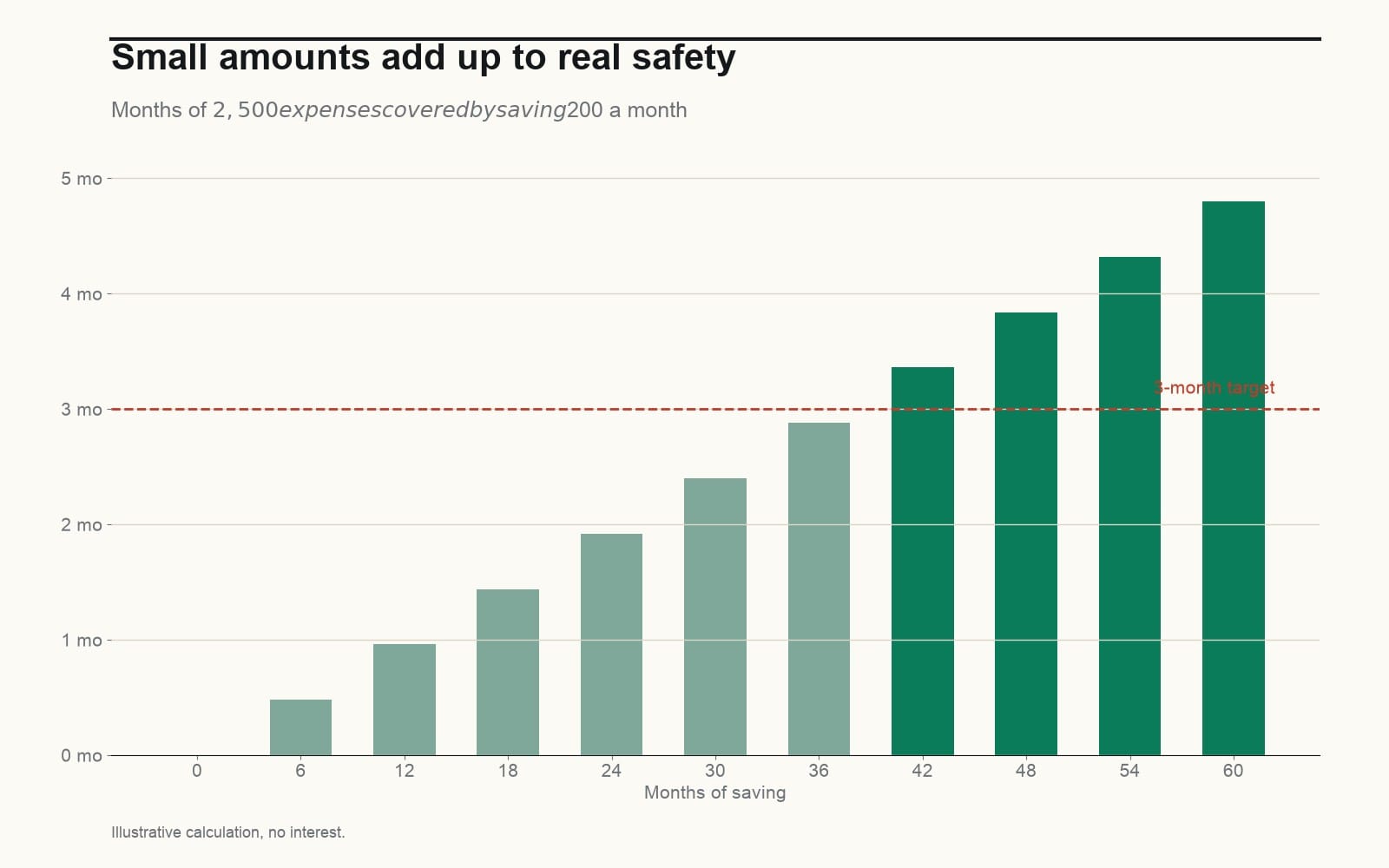
Then aim for one month of essential costs: rent, bills, food and transport. Then three. Each step makes the next one easier, because you are no longer paying interest on emergencies.
Where to keep it
Your emergency fund needs to be safe and easy to reach, but not so easy that you spend it by accident. A separate savings account, ideally at a different bank from your everyday account, works well. It should pay some interest, but chasing the highest rate is less important than being able to get the money within a day or two.
What counts as an emergency
This is where many funds quietly disappear. A useful test has three parts: is it unexpected, is it necessary and is it urgent? A broken boiler in winter passes all three. A sale on a new sofa passes none.
Regular costs that happen every year, like car insurance, holidays or birthday presents, are not emergencies either, even if they feel like it when the bill arrives. They belong in a separate savings pot, built up a little each month.

Refilling after you use it
Using your emergency fund is not failure. It is the fund doing its job. The important step is refilling it afterwards. Treat the refill like a bill: set up a regular transfer until the fund is back to where it was. If you had to use it more than once in a year, that is useful information, too. It might mean a regular cost is hiding in your emergencies.
How big it should be for you
Three to six months is an average. The right size depends on your life.
- Smaller may be fine if you have a very secure job, a partner with a separate income and few dependants.
- Larger is wiser if you are self-employed, your income varies, you are the only earner in your household or you work in an industry where jobs can disappear quickly.
- Homeowners should add a little extra for repairs, which always arrive at the worst moment.
Building it when money is tight
If your budget has no obvious room, start smaller than feels useful. Ten or twenty dollars a week still adds up to several hundred in a year, enough to handle a surprise that would otherwise go on a card. Round-up features, which save the change from each card purchase, can help people who find a fixed amount hard.
Windfalls help too. A tax refund, a birthday gift or a bonus can be split: some for something enjoyable, the rest into the emergency fund. Many people find that a clear rule, such as half of every windfall, makes the decision easy and guilt-free.
Should you pay off debt first?
If you have expensive debt, like a credit card, it can seem wrong to save at the same time. A common compromise is to build a small starter fund first, perhaps $500 to $1,000, and then focus hard on the debt. Without that small cushion, the next surprise simply goes back on the card.
The bottom line
Forget the guilt. Start with a small, reachable goal, keep the money somewhere separate, use it only for real emergencies and refill it when you do. A modest emergency fund you actually have is worth far more than a perfect one you are still planning to start.