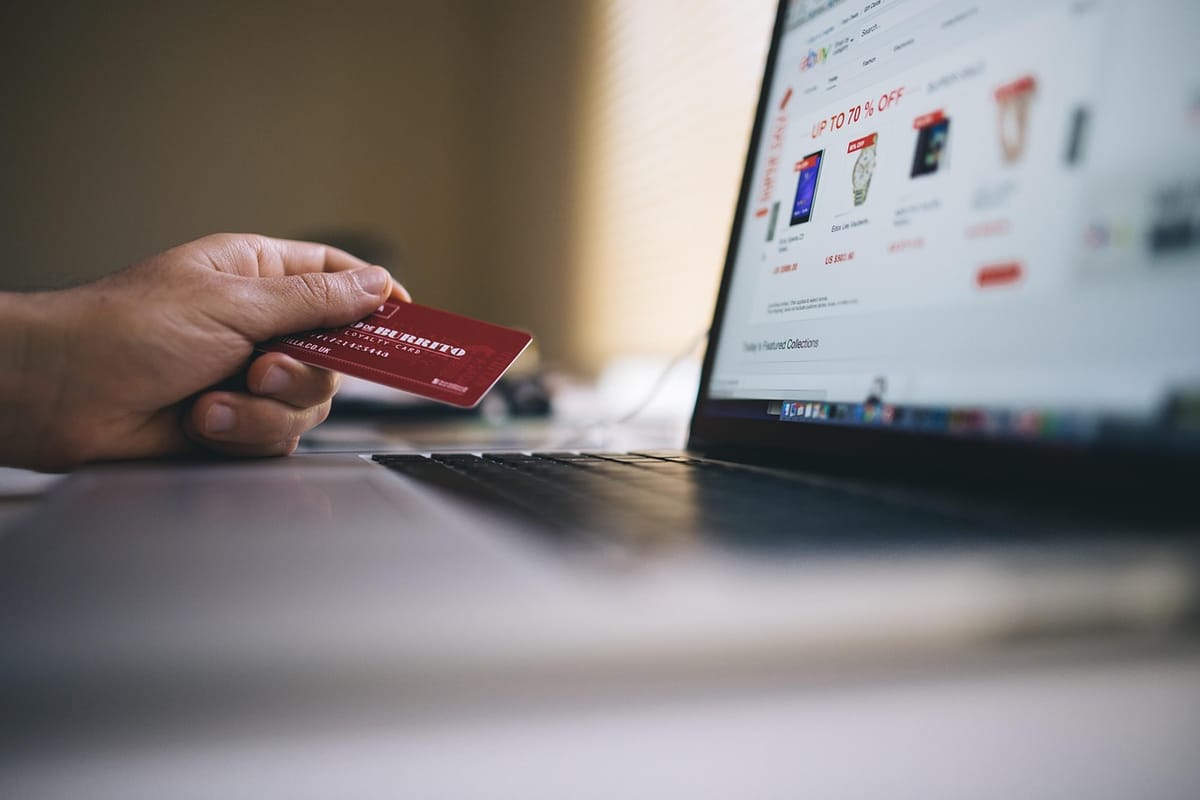
At the online checkout, a friendly button offers to split your $600 purchase into four easy payments of $150, with no interest. It feels like free money. Sometimes it is. But buy now, pay later services have grown very quickly, and so have the stories of people who ended up paying much more than they planned. Here is how they actually work.
How it works
Buy now, pay later, often shortened to BNPL, lets you split a purchase into a few instalments, usually four payments over six weeks or monthly payments over a few months. The first payment is taken at checkout. The rest are taken automatically from your card.
If you pay every instalment on time, you usually pay no interest and no fees. The shop pays the BNPL company a fee instead, typically a few percent of the sale, because customers who can split payments tend to buy more.
The price of a product is the same with or without BNPL. What changes is how much you buy.
Hannah Weiss
Where the costs come from
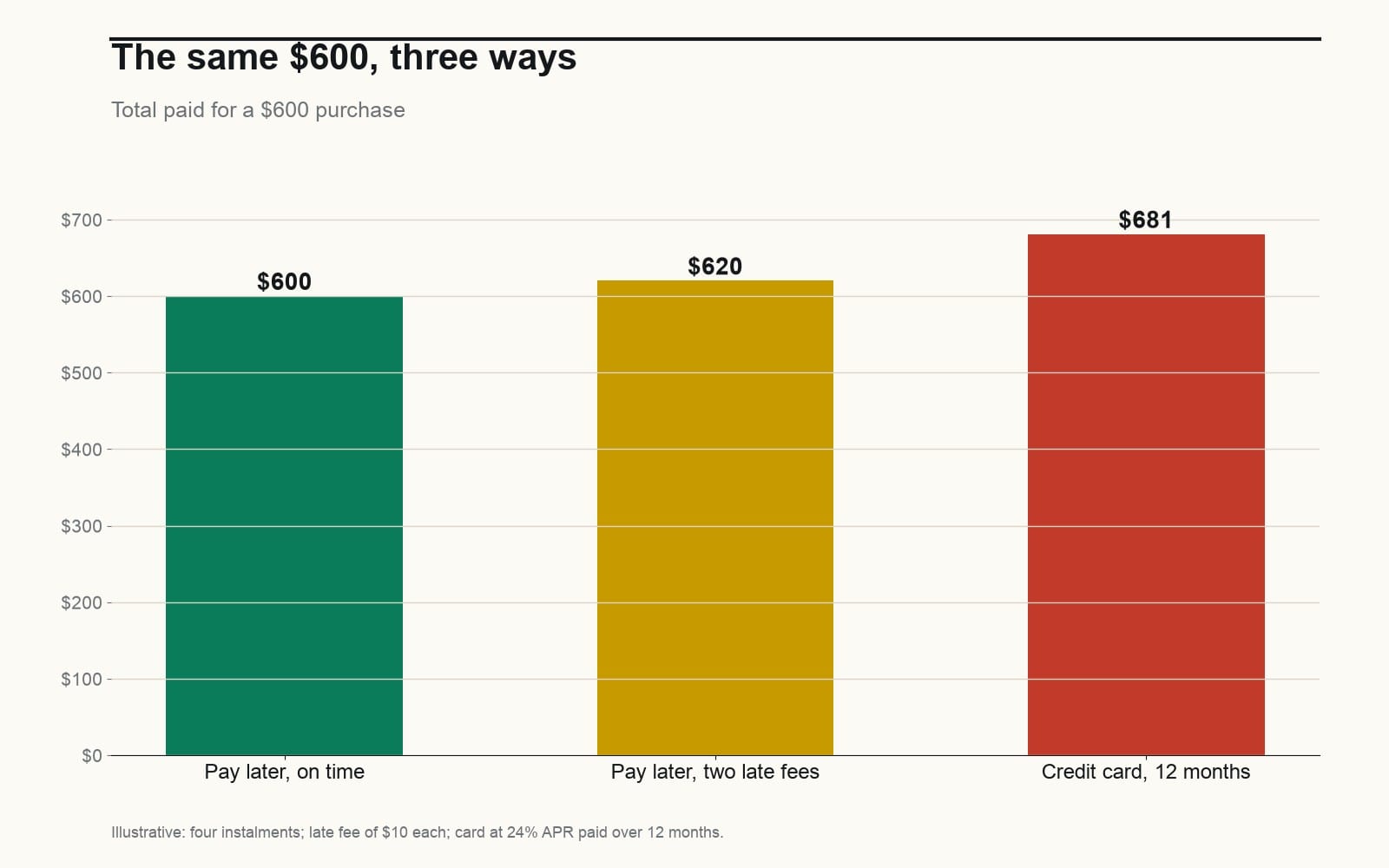
The service is free only if everything goes to plan. Costs appear in three ways.
- Late fees. Miss a payment and you may be charged a fixed fee, sometimes for every missed instalment.
- Longer plans with interest. Some providers offer longer plans, for larger purchases, that do charge interest, sometimes at rates similar to a credit card.
- Spending more than you meant to. The biggest cost is not a fee at all. Splitting a price makes it feel smaller, and many people buy things they would not have bought if they had to pay the full amount today.
The problem with stacking
One BNPL plan is easy to track. Several at once are not. Because each purchase is split separately, a person can have five or six plans running at the same time with different companies, each taking small amounts on different dates. It becomes very hard to know how much you actually owe, and when.
This is where problems start. A payment fails because another one emptied the account the day before. A late fee is added. The next payment fails too.

Does it affect your credit?
Increasingly, yes. In many countries, BNPL companies now report to credit agencies, and missed payments can appear on your credit file. Some lenders also look at your BNPL use when you apply for a mortgage or a loan. Several regular BNPL plans can make a lender wonder whether your budget is under strain, even if you have never missed a payment.
When it can make sense
BNPL is not always a bad idea. It can be useful when you would buy the item anyway, you have the money but prefer to spread the payment, and you are certain you can make every instalment. For a planned purchase, used once and tracked carefully, it is an interest-free loan.
Simple rules for using it safely
If you do use BNPL, a few habits make it much safer:
- Only use it for things you would buy today if you had to pay in full.
- Never have more than one plan running at a time.
- Put every payment date in your calendar, with a reminder the day before.
- Keep enough money in the account for the next instalment at all times.
- If a payment might fail, contact the provider before it happens. Many will agree to move the date.
If you are already struggling
If BNPL payments have become hard to keep up with, the most important step is to stop adding new plans. Then list every plan you have, with the amounts and the dates, in one place. Seeing the full picture is uncomfortable, but it is the only way to make a plan.
Contact the providers before a payment fails, not after. Most have hardship teams and can pause or spread payments. Free, independent debt advice services exist in many countries and can help you prioritise, especially if BNPL is one of several debts. Asking for help early is always cheaper than waiting.
A note for shops
For retailers, BNPL can increase sales, but it comes with fees and with customers who may later struggle. Some shops now show the full price more prominently than the instalment price, which is both fairer and, according to some retailers, better for long-term customer trust.
The bottom line
BNPL is a tool, and like most financial tools, it works well for people who are organised and poorly for people who are stretched. Its real danger is not the fees, which are small, but the feeling that a price is smaller than it is. The next time the friendly button appears, try reading the full price out loud first.